When a first review fails, the assessor writes down what fell short, the remediator redoes those spots and the area is checked again. That is not unusual on larger jobs, so leave a little room in the schedule. Call the number on this page to be connected with a local mold company in Southampton.
Where it falls in the order of work
- An assessor writes the plan.
- A different company carries it out.
- Containment comes down after cleaning and drying.
- The assessor returns for clearance.
- Rebuilding starts only on a pass.
Step four gates everything that follows.
Moisture readings
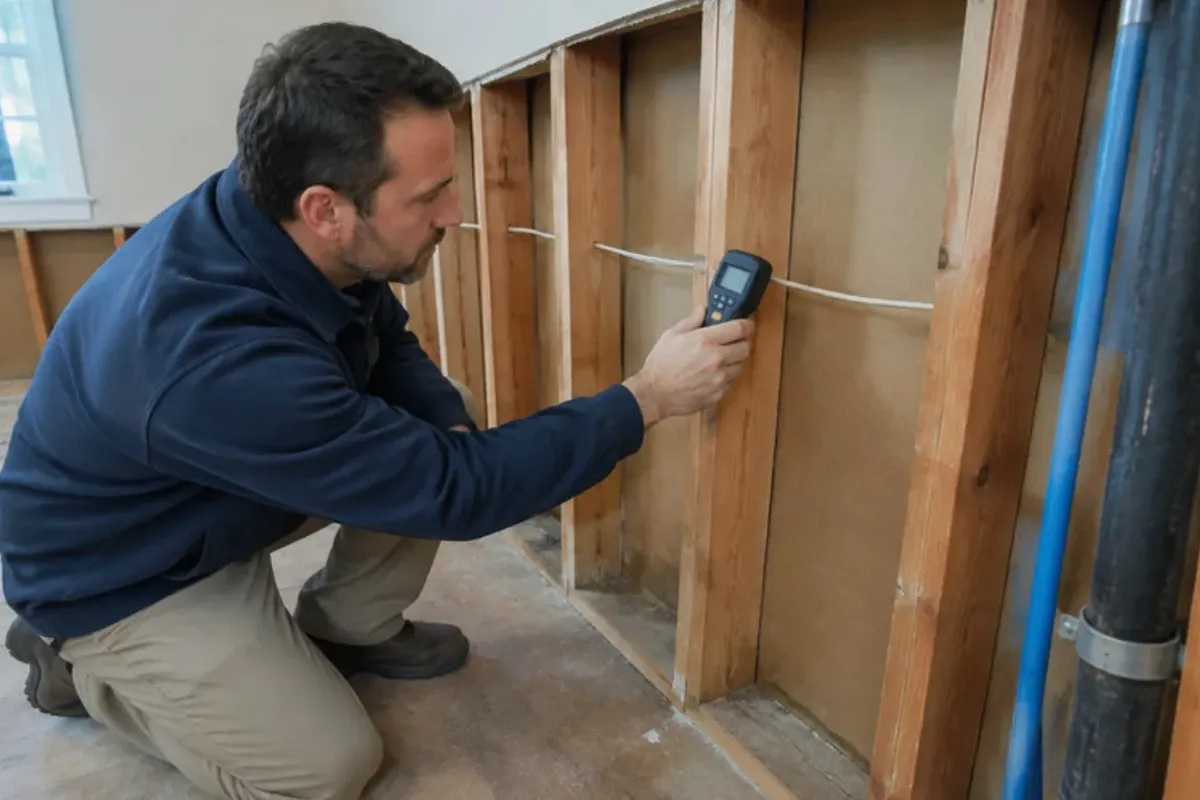
Mold needs water, so a meter reading framing, subfloor or masonry matters as much as eyesight. Materials that still read wet suggest the source was not fully solved. Expect readings in every area of concern, and expect wet numbers to send the project back to drying. Readings are logged with locations and dates.
Timing with the rebuild
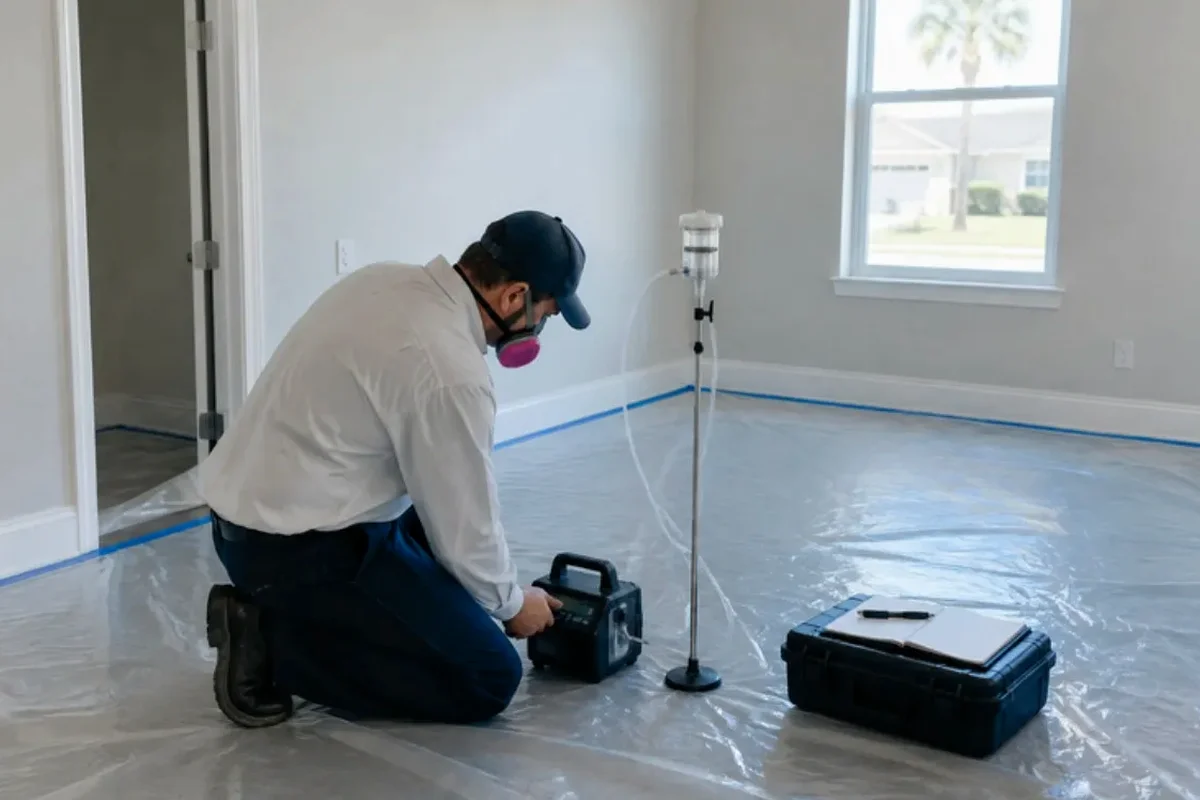
Clearance sits between cleanup and carpentry, so delays ripple into the rebuild. Let the drywall, paint and flooring crews know the date, and ask the assessor how soon the report follows the visit. A clear schedule avoids paying idle trades. Build slack into the calendar for a retest.
Coordinating the trades
Line up the rebuild crew only after clearance. Drywall, paint and flooring crews should wait for the passing report rather than starting when cleanup ends. Respecting that order keeps the schedule predictable and prevents covering areas that may need another pass. Give each trade the earliest realistic date.
Water first, always
No clearance report protects a house that is still taking on water. A dripping pipe, roof leak or seeping foundation will bring mold back in the same place. EPA's advice applies: solve the moisture problem and dry wet materials within 24 to 48 hours. Fixing the source is the one step that cannot be skipped.
Permits and license checks in Southampton
Home improvement contractors working on Pennsylvania homes generally must register with the Attorney General's office, and the registration number (it starts with PA) has to appear on contracts, estimates and ads. The office's online search confirms it.
Some owners hire one independent company for the inspection and clearance check and a different company for the cleanup, so the business judging the result isn't the one that did the work.
Rebuild work after the mold comes out, such as new drywall or framing, may need a permit; the Upper Southampton Township building office is where to ask for Southampton addresses.
Water that came in from outside raises insurance questions; FEMA's flood map search shows whether the property sits in a mapped flood zone.
Companies that take calls here usually also work in Huntingdon Valley, Richboro and Feasterville Trevose.
Southampton at a glance
Calls come in from across Southampton, including around Street Road, Second Street Pike, Bristol Road.
Most homes in Upper Southampton Township were built in the mid-twentieth century, so older basements and aging systems are common.
Post-Remediation Clearance Testing questions in Southampton
Who should perform clearance?
How is clearance priced?
Do small cleanups need clearance?
What records should I keep afterward?
More mold services in Southampton
Post-Remediation Clearance Testing nearby
Helpful guides
Sources
Last updated: