Drugstore and hardware-store kits mostly show that spores exist, and spores exist in every home. A specimen taken with a plan, labeled locations and a custody form is far easier to rely on. Call the number on this page to be connected with a local mold company in Wilmington.
Which path fits your case?
Mold you can see: stop moisture, then clean or remove. Odor with no source: sample and survey. Cleanup already done: confirmation sampling. Buying or renting: a baseline record for that date. Not sure which one you are in? Describe the house to a company and it usually becomes clear fast.
How locations get chosen
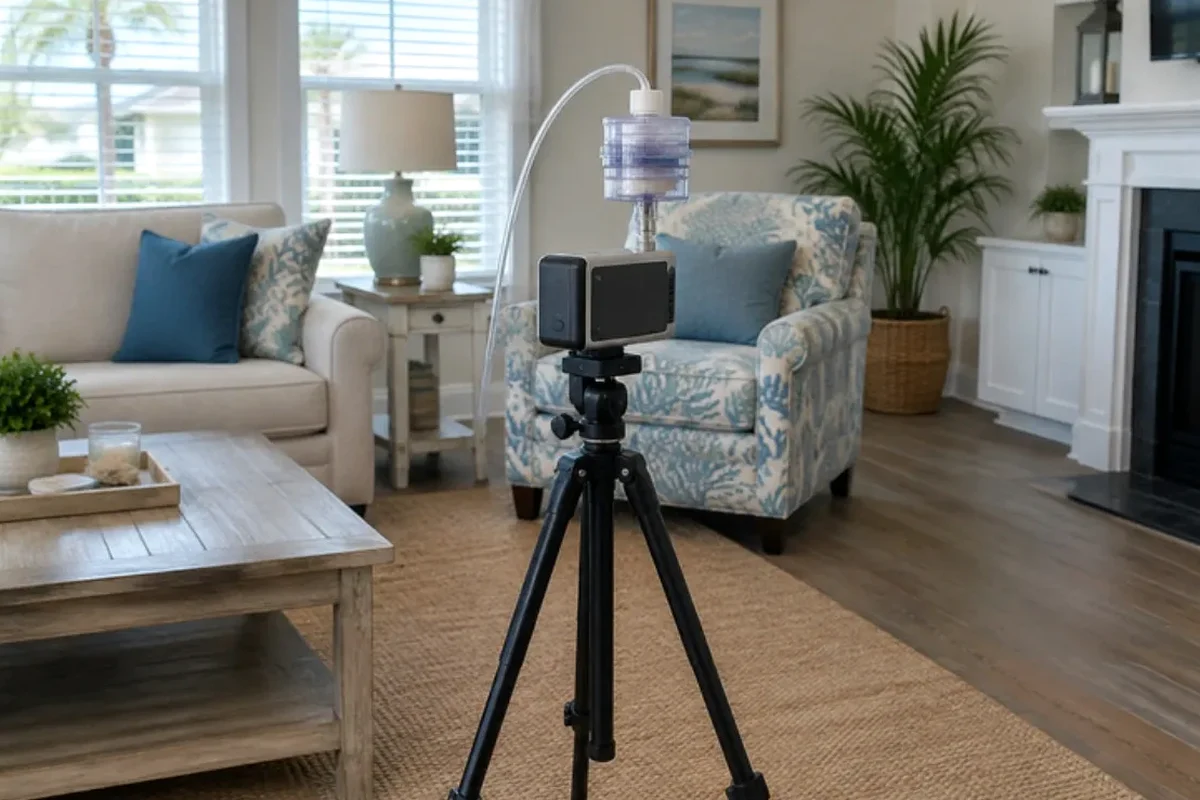
A typical plan samples the room you are worried about, a second room that seems fine and the outdoors. If ducts are suspect, a spot near the return or air handler may be added. Choices follow moisture readings and house layout, not routine. Ask to see the plan before samples are taken.
Houses in Wilmington from the 1960s often still carry original supply lines and ductwork, a typical reason owners ask for lab work when a smell has no obvious origin.
Near open water, damp air and occasional high groundwater can nourish growth in basements and garages; any sampling should include a comparison specimen collected close by outdoors.
Sometimes someone else shares the cost
Buyers, sellers, landlords and insurers now and then split what testing costs when it resolves a disagreement. Whether that applies turns on your contract or policy, which only you can read. Ask before booking so the report goes to the right parties.
Who handles what in Wilmington
Contractors doing business in Delaware, whether based in the state or not, need a Delaware business license from the Division of Revenue. The division's business license search shows whether one is on file.
Keep the inspection report, the scope of work and any clearance results together; buyers, landlords and insurers often ask for them later.
Rebuild work after the mold comes out, such as new drywall or framing, may need a permit; the Wilmington Department of Licenses and Inspections is where to ask for Wilmington addresses.
For flood zone questions after a heavy rain, FEMA's flood maps and your insurance agent can confirm the mapped zone for an address.
Calls from Wilmington are often matched with companies that also cover Claymont, Garnet Valley and Chadds Ford.
Walk the house together
If possible, stay for the walkthrough. Mentioning the room that smells, the leak history and the spot where a stain once showed up hands the assessor leads that no instrument can supply. It also lets you ask why each location was picked. Take notes so you can compare later visits.
Cellars, window wells and attics
Cold foundation walls, sump pits, below-grade window wells and roof sheathing that sweats in winter are common problem areas around Philadelphia. Specimens taken after a long muggy stretch or a hard storm can read differently from those after dry days, so mention recent weather. Photos of recent damp spots help the assessor decide where to focus.
More about Wilmington
Calls come in from across Wilmington, including around Trolley Square, Little Italy, Quaker Hill.
Many Wilmington homes are row houses, including late-1800s blocks in the Trinity Vicinity historic district, where shared walls and older masonry can let moisture in.
Mold Testing questions in Wilmington
What counts as a safe number on a lab report?
Is it fine if the tester also does the removal?
What is a typical cost structure for testing?
Can a good result still hide a problem?
More mold services in Wilmington
Mold Testing nearby
Helpful guides
Sources
Last updated: